
$ ls ~/talks
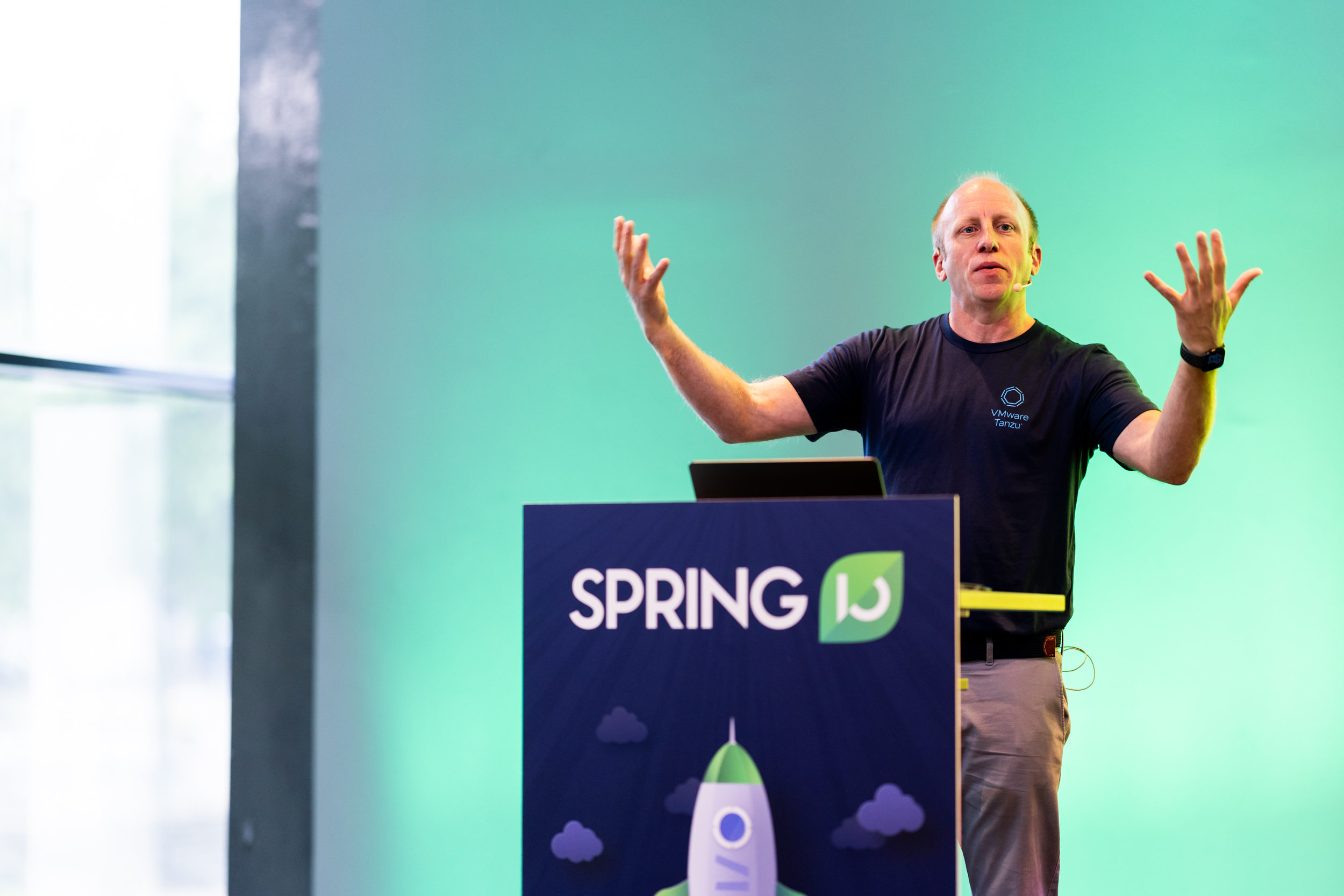
Hi, I'm Dan. I help developers make sense of Spring, modern Java, and AI live on stage.
I've given 100+ talks in 32 cities, from SpringOne and Spring I/O keynotes to local Java User Groups. Every talk gets live code, honest opinions, and something you can build the same afternoon.
Speaking since 2002 · abstracts · past talks
Where you can catch me next
Portland Java User Group · Portland, OR
AI for Java Developers
AI has become an unavoidable topic in software development, and many Java developers are wondering if they need to learn Python to participate. The answer is no. The Java ecosystem has everything you need to build modern AI applications, and your existing skills carry over more than you might think. This session bridges the gap between traditional Java development and AI. We'll cover the core concepts of AI and large language models in terms familiar to Java developers, then look at what's possible today: chatbots, retrieval augmented generation, recommendation systems, and intelligent agents, all built on the JVM. You'll leave with a clear picture of the Java AI landscape, the confidence that you don't need to switch languages to build production AI features, and a starting point for your first project.
Commit Your Code 2026 · Plano, TX
AI for Java Developers
AI has become an unavoidable topic in software development, and many Java developers are wondering if they need to learn Python to participate. The answer is no. The Java ecosystem has everything you need to build modern AI applications, and your existing skills carry over more than you might think. This session bridges the gap between traditional Java development and AI. We'll cover the core concepts of AI and large language models in terms familiar to Java developers, then look at what's possible today: chatbots, retrieval augmented generation, recommendation systems, and intelligent agents, all built on the JVM. You'll leave with a clear picture of the Java AI landscape, the confidence that you don't need to switch languages to build production AI features, and a starting point for your first project.
KCDC 2026 · Kansas City, MO
What's New in Spring Boot 4
The next major release of Spring is here, and this is your comprehensive guide to what matters most. Spring Boot 4 delivers exceptional performance gains, streamlined developer workflows, and production-ready features that solve real-world challenges. In this session, you'll not only learn what's new but experience it firsthand through live coding demos. We'll explore HTTP interfaces, JSpecify null safety, Jackson 3 integration, and the built-in resilience patterns that make your applications production-ready from day one.
KCDC 2026 · Kansas City, MO
Zero to Superpowers with Claude Code
Claude Code is powerful. Maybe too powerful. With so many features, it's hard to know where to start. In this session, I'll show you how I actually use Claude Code day to day. We'll start with the basics that deliver immediate value. Then we'll build up to the features that make Claude Code truly yours: custom slash commands, skills, and agents that fit your workflow. You don't need to learn everything at once. You need to know what matters first and what to add as you grow. By the end, you'll have a clear path from beginner to power user.
dev2next 2026 · Lone Tree, CO
Fundamentals of Software Engineering In the Age of AI Workshop
Agentic coding assistants and editor-based AI chat interfaces are altering the development workflow leading some to proclaim the end of software engineering. Is it time to explore other careers? Not so fast, the rumors of our demise are greatly exaggerated! This intensive full-day workshop bridges the critical gap between what early-career developers learn in formal education and what they need to thrive in professional environments where human expertise and artificial intelligence increasingly collaborate.
dev2next 2026 · Lone Tree, CO
Spring AI: There and Back Again
Every great journey begins with a single step out the front door. For Spring developers, that step is a ChatClient and a prompt. This is that adventure: we'll set out with the basics of Spring AI, teach our application to use tools, cross into the wider world through MCP, and at the edge of the map, meet the agents. Applications that can think, plan, and act on their own. Along the way you'll pick up working code and a clear mental model of how the pieces of Spring AI fit together in a real application.
dev2next 2026 · Lone Tree, CO
Zero to Superpowers with Claude Code
Claude Code is powerful. Maybe too powerful. With so many features, it's hard to know where to start. In this session, I'll show you how I actually use Claude Code day to day. We'll start with the basics that deliver immediate value. Then we'll build up to the features that make Claude Code truly yours: custom slash commands, skills, and agents that fit your workflow. By the end, you'll have a clear path from beginner to power user.
Porto Tech Hub Conference 2026 · Porto, Portugal
Fundamentals of Software Engineering in the Age of AI (Opening Keynote)
Every few years, something comes along that's supposed to end software engineering as we know it. IDE features that write code for you. Low-code. No-code. Now AI. And every time, the role adapts, the fundamentals stay, and the people who understand the craft come out ahead. Still, the anxiety this time around is real. The headlines say software engineering is dead. Your group chat says juniors are cooked. Your CEO just asked why the team isn't shipping 10x faster. Take a breath, because nobody knows where we are heading, but it's worth talking about honestly. Here's something you've probably noticed. AI is amazing at the things you don't know. Ask it about a language you've never touched or a framework you're just picking up, and it looks like magic. Then you ask it about the code you've lived in for five years, and suddenly you're catching mistakes on every other line. That's not a bug in the tool. That's the fundamentals talking. AI tools are genuinely powerful, and they reward the developers who already understand what good software looks like. Naming things well, knowing when to refactor, reading code critically, designing systems that hold up. These fundamentals matter more now, not less, because they're what let you tell when the output is wrong. Whether you write code, ship it, or plan the work around it, Dan Vega and Nate Schutta will cut through the noise around AI coding tools: where they help, where they hurt, and why the fundamentals are your biggest advantage right now. You'll leave knowing what to invest in, what to keep learning, and why the craft still matters.
QCon San Francisco 2026 · San Francisco, CA
AI for Java Developers
AI has become an unavoidable topic in software development, and many Java developers are wondering if they need to learn Python to participate. The answer is no. The Java ecosystem has everything you need to build modern AI applications, and your existing skills carry over more than you might think. This workshop is the hands on version of that idea. Bring a laptop with Java and your IDE of choice. You'll spend three hours coding alongside me and end the session with a working AI powered Spring Boot application you understand top to bottom. We'll build it one feature at a time. Model abstraction, so your code runs against OpenAI, Anthropic, or a local model on your laptop with a single config change. Prompt templates for cleaner, reusable prompts. Structured output that turns LLM responses into typed Java objects you can use in your domain. Tool calling that lets the model fetch live data and trigger real actions in your application. And the Model Context Protocol, where you'll build a working MCP server that exposes your application's capabilities to any MCP compatible AI client. You don't need prior AI experience. Just comfort with Spring Boot and a willingness to write code alongside the room. You'll leave with a working repository, a clear mental model of how the pieces fit together, and the confidence to bring AI capabilities back to your own projects.
QCon San Francisco 2026 · San Francisco, CA
The Fundamentals of Software Engineering in the Age of AI
Every few years, something comes along that's supposed to end software engineering as we know it. IDE features that write code for you. Low-code. No-code. Now AI. And every time, the role adapts, the fundamentals stay, and the people who understand the craft come out ahead. Still, the anxiety this time around is real. The headlines say software engineering is dead. Your group chat says juniors are cooked. Your CEO just asked why the team isn't shipping 10x faster. Take a breath, because nobody knows where we are heading, but it's worth talking about honestly. Here's something you've probably noticed. AI is amazing at the things you don't know. Ask it about a language you've never touched or a framework you're just picking up, and it looks like magic. Then you ask it about the code you've lived in for five years, and suddenly you're catching mistakes on every other line. That's not a bug in the tool. That's the fundamentals talking. AI tools are genuinely powerful, and they reward the developers who already understand what good software looks like. Naming things well, knowing when to refactor, reading code critically, designing systems that hold up. These fundamentals matter more now, not less, because they're what let you tell when the output is wrong. Whether you write code, ship it, or plan the work around it, Dan Vega and Nate Schutta will cut through the noise around AI coding tools: where they help, where they hurt, and why the fundamentals are your biggest advantage right now. You'll leave knowing what to invest in, what to keep learning, and why the craft still matters.